


Views: 0 Author: Site Editor Publish Time: 2026-07-31 Origin: Site


Transitioning from manual, tethered operations to wireless control represents a critical upgrade for job site safety and pour precision. Operating heavy machinery near high-pressure lines leaves absolutely no margin for error. We recognize these high-stakes environments feature intensely congested sites and demanding daily timelines. An Industrial Remote Control system becomes essential to manage such extreme conditions flawlessly. A highly reliable system dictates the efficiency of your pump operator while securing the safety of the entire ground crew.
Evaluating these advanced solutions requires you to look far beyond basic push-button functionality. We must strictly scrutinize signal reliability, component durability, and robust fail-safe integration. In this comprehensive guide, you will discover how to precisely match the right communication architecture to your specific heavy machinery. You will also learn practical evaluation criteria to ensure secure, uninterrupted concrete pours on every complex construction project.
System Architecture: Modern concrete pump remote control relies on a tightly integrated triad: the operator transmitter, the machine-mounted receiver, and proportional hydraulic valves.
Equipment Specificity: Requirements shift drastically between line pumps (durability, simplicity) and boom pumps (multi-axis precision, advanced feedback).
Safety as a Baseline: True industrial-grade systems are defined by verifiable compliance (e.g., ISO 13849, SIL ratings) and absolute emergency stop (E-stop) reliability.
We must thoroughly understand the technical baseline before deploying new equipment. Grasping these core fundamentals prevents you from overpaying for unnecessary features. It also stops you from under-speccing critical communication links. Every single electronic component must justify its operational presence on the truck. Technical ignorance regarding control systems often leads to highly dangerous site failures.
Operators are actively transitioning from simple push-buttons to a highly proportional joystick remote control. We frequently refer to this specific form factor as the "belly box" style. It sits securely against the operator's waist for extended ten-hour shifts. Tactile feedback plays a vital role in daily operations. Operators feel the boom movement smoothly without constantly looking down at their hands. Enclosures require at least an IP65 rating to effectively block invasive dust and wet slurry. Advanced battery lifecycle management ensures you never lose critical power mid-pour.
The receiver mounts directly onto the concrete pump truck chassis. It rapidly translates incoming RF radio signals into highly actionable digital data. Modern receiver units utilize advanced CAN-bus protocols for seamless communication. Some legacy configurations still rely on direct analog voltage outputs instead. The receiver feeds this converted data instantly to the pump's programmable logic controller (PLC). The central PLC then directly commands the complex hydraulic systems.
Wireless signals hold absolutely no value if the mechanical hydraulic response lags. A robust concrete pump remote control relies heavily on high-quality electro-proportional valves. Zero-latency communication firmly guarantees smooth, jerk-free pumping cycles. We require this precise execution for safe, predictable boom movements over active crews. Sudden hydraulic jerks can easily destabilize the entire truck structure.
To fully grasp the architecture, we break the system down into three primary execution stages:
Input Generation: The operator manipulates the joysticks, generating variable electrical resistance.
Signal Transmission: The transmitter encodes this input and broadcasts it over secured radio frequencies.
Hydraulic Actuation: The receiver decodes the packet and drives the proportional valves to move the boom.
A generic one-size-fits-all approach completely fails in concrete pumping. Your selected remote must perfectly match the mechanical complexity of your specific pump. Overcomplicating a simple machine wastes valuable setup resources. Simplifying a complex boom introduces severe operational hazards.
Managing a massive five-section Z-fold boom pump requires intense multi-axis precision. Operators absolutely need highly responsive, proportional joysticks. They routinely handle simultaneous unfolding, slewing, and active pumping tasks. Digital screens provide vital real-time telemetry back to the user. You continuously monitor internal pump pressure, engine RPM, and active fault codes. This advanced concrete boom control significantly prevents structural stress. It keeps the boom perfectly balanced during rapid, high-volume pours.
These ground-level machines operate very differently from aerial booms. They heavily prioritize extreme ruggedness and daily drop-resistance. Complex digital telemetry takes a back seat to sheer physical durability. We focus primarily on linear, binary control functions here. Operators manage standard pump on/off, volume up/down, and quick reverse actions. Pure simplicity ensures extreme longevity in these harsh ground environments.
A purpose-built pump truck wireless control system heavily mitigates accidental operator error. Generic aftermarket remotes often lack these highly nuanced control profiles. A customized digital interface actively prevents catastrophic misclicks.
Feature Requirement | Boom Pumps | Line / Trailer Pumps |
|---|---|---|
Control Style | Proportional Joysticks (Multi-Axis) | Push-Button / Toggle Switches |
Ergonomics | Belly Box with Shoulder Harness | Handheld Pistol Grip or Small Pendant |
Telemetry Display | Required (Pressure, RPM, Alarms) | Optional (Basic LED status indicators) |
Durability Focus | Vibration Resistance & Weatherproofing | High Impact & Drop Resistance |
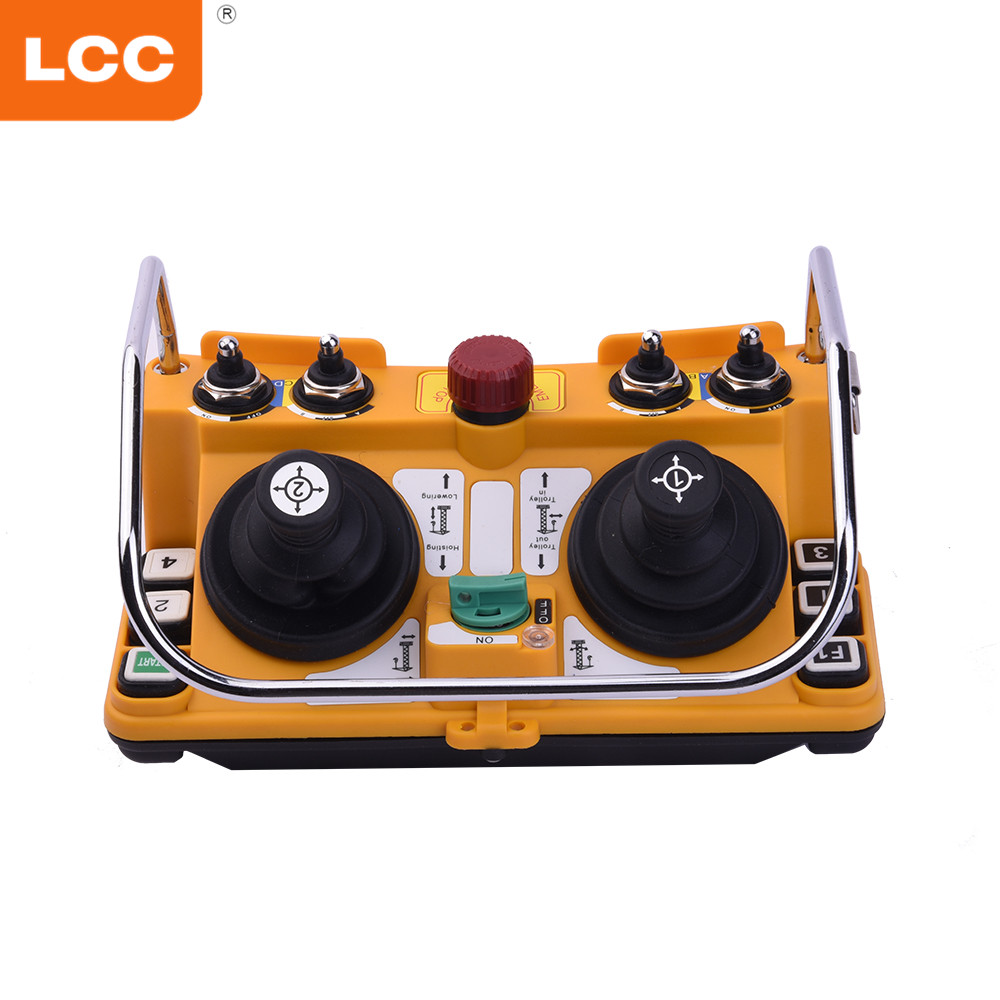
Selecting the right hardware requires a strict, uncompromising evaluation process. We must look past aesthetic designs and focus purely on functional resilience. Operating heavy machinery leaves no room for ambiguous performance claims.
Crowded urban construction sites constantly generate massive RF interference. Overlapping radio waves act as a primary failure point for cheaper electronic systems. You must look specifically for Frequency Hopping Spread Spectrum (FHSS) technology. FHSS constantly shifts frequencies multiple times per second to dodge active interference. Secure pairing protocols firmly lock out stray signals emitted from nearby tower cranes.
Never accept "safe" as a generic marketing claim. You must formally require documented PL-d or PL-e (Performance Level) safety ratings. Redundant emergency stop (E-stop) circuits act as mandatory hardware safeguards. They force a complete, immediate hydraulic lockout upon any signal loss. This dual-channel architecture prevents runaway boom movements entirely.
You must carefully assess the physical strain placed on your daily operators. Evaluate the total unit weight, harness strap design, and intuitive button layout. A heavy, unbalanced system causing operator fatigue introduces dangerous indirect safety risks. Exhausted operators routinely make highly costly mental mistakes. Physical comfort directly translates into sustained, reliable job site safety.
Summary Chart: Procurement Evaluation Matrix | ||
Evaluation Dimension | Minimum Acceptable Standard | High-Performance Standard |
|---|---|---|
Signal Integrity | Fixed clear channel via manual selection | Automatic FHSS (Frequency Hopping) |
Safety Compliance | Basic hardware E-stop button | ISO 13849 PL-d / SIL 3 Certified |
Operator Ergonomics | Standard neck strap harness | Padded multi-point shoulder harness |
Upgrading to modern industrial remote control systems rarely happens in a plug-and-play manner. You need thorough mechanical preparation and specialized technical expertise. Field crews require proper technical onboarding to trust the new digital inputs.
Older mechanical pumps present highly specific wiring harness compatibility issues. Voltage regulation requires your careful, ongoing attention during installation. You must account for extended bay downtime to successfully calibrate new proportional valves. The new digital receiver needs perfectly tuned hydraulic responses to match the legacy pump block. Electrical integration often demands custom relay panels and meticulous wire splicing.
Establish extremely strict protocols for daily equipment use. Focus heavily on regular electrical contact cleaning and aggressive moisture mitigation. Alkaline concrete slurry remains highly corrosive despite high IP ratings. Rubber seals degrade rapidly if left coated in wet cement. Manage your backup batteries rigorously to prevent sudden mid-pour failures. A dead transmitter battery halts a hundred-yard pour instantly.
Always plan comprehensively for a mechanical "limp mode". Keep tethered backup pendant operations ready on site at all times. Catastrophic wireless link failures happen rarely but demand immediate, pre-planned solutions. Ground crews must know exactly how to engage manual override levers safely. You avoid disastrous concrete curing inside the pipes by maintaining secondary manual controls.
Selecting a hardware partner matters just as much as the technology itself. We must evaluate the support ecosystem backing the hardware.
A cheap initial hardware system quickly becomes a massive operational liability. Imagine waiting three long weeks to replace one broken toggle switch. Evaluate the vendor's domestic parts inventory very strictly. Test their technical support responsiveness before committing to a final purchase. Reliable, local repair capabilities keep your fleet actively pumping concrete daily.
Weigh the guaranteed compatibility of OEM replacements very carefully. Compare this baseline against specialized third-party industrial remotes. Specialized third-party units often offer heavily modernized features and superior operator ergonomics. They also frequently provide more robust anti-interference technologies. You must smartly balance guaranteed OEM fitment against superior daily field performance.
We strongly recommend running a targeted, limited pilot program first. Choose a single, high-use pump truck for intense initial testing. Benchmark the daily battery life, operator tactile feedback, and total signal reliability. Validate these crucial performance metrics thoroughly before authorizing any fleet-wide rollout. Data-driven field testing completely prevents widespread operational disruptions.
An industrial remote control serves as the absolute central nervous system of a modern concrete pump operation. Its performance directly impacts your daily cycle times and dictates comprehensive site safety. Moving beyond manual levers drastically improves operator visibility and hazard avoidance. You empower your operators to position themselves optimally for every single pour.
Decision-makers must relentlessly prioritize verifiable safety ratings and application-specific ergonomics. Do not let initial hardware price tags blind you to long-term operational resilience. Robust aftermarket support and anti-interference protocols provide immense ongoing value. Cutting corners on mission-critical communication links guarantees future mechanical liabilities.
Take immediate action by auditing your current fleet's remote systems for strict safety compliance. Inspect aging wiring harnesses and test emergency stop functionalities rigorously. Consult with a specialized control systems engineer to properly scope your next modernization project. Upgrading your controls secures your crew and elevates your operational efficiency simultaneously.
A: Industrial-grade systems feature an automatic, fail-safe emergency stop. If the receiver misses a heartbeat signal for a specified millisecond threshold, it defaults all valves to neutral and halts the pump immediately. This prevents any uncommanded boom movement.
A: Yes, but it requires installing electro-proportional hydraulic valves and a fully compatible digital receiver. This process involves significant mechanical labor, precise valve calibration, and complex electrical integration to bridge old hydraulics with modern electronics.
A: High-quality belly box transmitters typically offer 12 to 24 hours of continuous operational time per charge. This duration depends heavily on live telemetry screen usage and the internal battery chemistry utilized (Li-ion vs. NiMH).
A: FHSS technology continuously scans and switches between multiple radio frequencies several times per second. If it detects disruptive noise from a nearby tower crane or another pump truck, it automatically shifts to a clear channel without any operator intervention.