


Views: 0 Author: Site Editor Publish Time: 2026-09-03 Origin: Site


Concrete pumping demands absolute precision in highly volatile environments. You regularly navigate tight job sites, execute blind pours, and mitigate severe safety hazards. In these high-stakes conditions, your remote serves as much more than a simple accessory. It acts as the primary interface for fluid output management and operator safety. A poor connection or delayed response can turn a routine pour into a costly disaster. Fleet managers and operators must carefully assess technical specifications before upgrading their equipment. We will guide you through a risk-averse evaluation of critical features. You will learn how to assess signal integrity, ergonomic design, and safety compliance. This guide ensures you select a system built to handle grueling 10-hour shifts and demanding concrete slurry environments. Let us dive into the core requirements for choosing the perfect setup to protect your crew and maximize daily productivity.
Signal Integrity: Frequency Hopping Spread Spectrum (FHSS) is non-negotiable for avoiding interference on crowded job sites.
Safety First: Emergency Stop (E-Stop) latency must meet strict functional safety standards (e.g., ISO 13849).
Durability: Enclosures require IP65/IP67 ratings to withstand concrete slurry, chemical washdowns, and impact.
Ergonomics: Tactile feedback and proportional control dictate operator fatigue and precision during long pours.
Vendor Support: Fast replacement availability and backward compatibility drastically reduce unscheduled downtime.
Every project timeline depends on continuous, uninterrupted concrete delivery. When you rely on an outdated or failing concrete pump remote control, you invite severe operational bottlenecks. Modern construction sites generate massive amounts of radio frequency (RF) interference. Cranes, two-way radios, and surrounding infrastructure crowd the local airwaves. Dead zones frequently trigger unexpected signal drops during critical pours.
When communication fails mid-pour, the pump halts abruptly. The concrete begins to cure inside the boom pipe. Crews stand idle while operators scramble to reestablish connection. You face severe schedule delays and exorbitant labor costs. A reliable signal prevents these chaotic work stoppages.
Safety and liability represent an even more pressing concern. An unreliable signal dramatically increases the risk of delayed emergency responses. If a hose whips or a boom swings off target, operators must hit the E-Stop instantly. Delayed latency directly translates to uncontrolled boom movements. This exposes your company to massive financial and legal liabilities. Property damage and job site injuries destroy profit margins.
Furthermore, hardware degradation introduces hidden expenses. Construction crews expose remotes to aggressive dust, moisture, and chemical washdowns daily. Poorly sealed remotes suffer rapid moisture ingress. Internals short out, and joystick potentiometers fail. You must constantly purchase replacement units when standard enclosures crack under pressure. Fleet managers quickly realize cheap enclosures devour maintenance budgets over a single fiscal year.
Upgrading your fleet requires a highly systematic approach. You must scrutinize the underlying technology powering your wireless pump controller. Look beyond glossy marketing brochures and evaluate the core engineering.
Frequency management dictates how well your system performs alongside competing signals. Operators typically choose between 900MHz and 2.4GHz bands. The 900MHz frequency easily penetrates dense physical obstacles like concrete walls and steel rebar. The 2.4GHz band offers higher data rates but struggles in cluttered environments. Regardless of the band, you must prioritize Frequency Hopping Spread Spectrum (FHSS) technology. Systems equipped with FHSS automatically scan and switch channels multiple times per second. They bypass localized interference before the operator ever notices a lag.
Operating range claims often mislead buyers. Manufacturers frequently advertise maximum distances achieved in perfect, open-field conditions. You must assess practical line-of-sight requirements instead. Most complex pours require a reliable operational radius of 300 to 500 feet. Focus on robust transmission strength within this practical bubble rather than theoretical maximums.
Table 1: Frequency Band Comparison for Concrete Pumping Environments
Feature | 900MHz Band | 2.4GHz Band |
|---|---|---|
Obstacle Penetration | Excellent (Penetrates concrete and steel walls) | Moderate (Highly dependent on clear line-of-sight) |
Interference Risk | Low to Medium (Less crowded frequency space) | High (Overlaps with local Wi-Fi and Bluetooth networks) |
Ideal Application | Heavy civil construction, blind pours, tunneling | Open-air residential sites, basic operations |
Functional safety defines the true value of any industrial remote. You must verify E-Stop latency parameters strictly. Emergency stops must engage in mere milliseconds. They must comply with regional safety directives like ISO 13849. Rapid response times prevent catastrophic boom collisions and hose whipping incidents.
Fail-safe architecture represents another mandatory requirement. Imagine an operator dropping the remote from a scaffold, shattering the battery compartment. The system must immediately default to a safe state. The receiver should automatically halt the pump and lock all hydraulic valves if the signal drops. We recommend verifying these fail-safe protocols during your initial equipment demonstration.
Concrete pumping destroys fragile electronics. You must mandate stringent Ingress Protection (IP) ratings. Only IP65 or IP67 ratings survive aggressive daily environments. IP65 protects against pressurized water jets during end-of-day washdowns. IP67 allows brief submersion in mud or slurry without internal damage.
Impact resistance requires reinforced exterior housing. Standard plastics crack easily when dropped from a truck deck. Look for heavy-duty nylon-glass fiber composites. These industrial-grade materials absorb massive shock. They protect internal circuit boards from severe vibration and blunt force impacts.
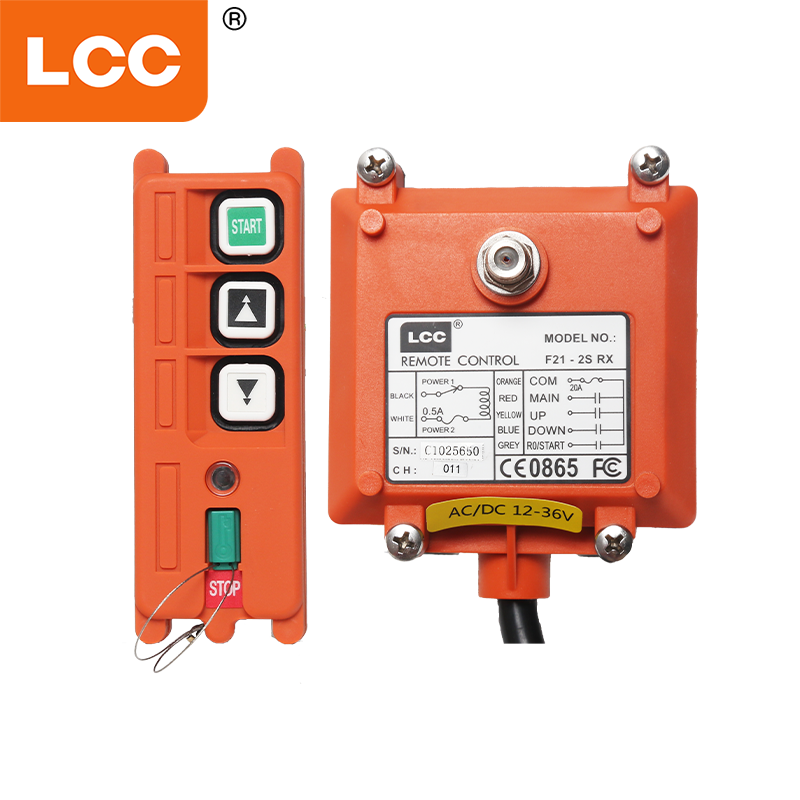
A highly durable Wireless concrete pump remote means nothing if operators hate using it. Fatigue directly impacts pouring precision and overall site safety.
Tactile feedback plays a massive role in daily operations. Operators constantly wear heavy, concrete-soiled gloves. They rely entirely on muscle memory and touch to navigate the control panel while watching the boom. Buttons must deliver a definitive mechanical click. Joysticks need proper resistance curves. Operators should never have to look down at their hands during a critical pour.
Proportional control dictates articulation smoothness. Jerky movements cause the boom to bounce violently. You must assess the sensitivity of paddles and joysticks. High-resolution proportional valves allow operators to feather the fluid output. This precision creates smooth, jerk-free boom articulation even at maximum extension.
Power architecture heavily influences continuous uptime. You must compare integrated battery designs against hot-swappable external batteries. Field experience strongly favors external batteries. When an integrated battery dies mid-pour, you must tether the remote to a charger. Hot-swappable setups allow operators to snap in a fresh pack in seconds. They keep the concrete flowing without interruption.
Weight distribution causes severe fatigue over an 8 to 10-hour shift. Fleet managers must evaluate harness designs carefully. Proper belly boxes distribute weight evenly across the hips and lower back. High-quality ergonomic shoulder harnesses reduce neck strain. You should actively solicit operator feedback regarding physical comfort before purchasing new fleet hardware.
Modernization requires seamless backward compatibility. Integrating a new pump transmitter receiver into an aging fleet can prove challenging. You must verify several technical communication protocols to ensure a smooth transition.
Wiring and protocol compatibility govern the installation process. Older pumps often utilize analog or Pulse Width Modulation (PWM) outputs. Newer systems rely entirely on digital CAN bus architecture. You must select a receiver capable of translating commands into the exact format your existing hydraulic valves require. Mismatched protocols force you to install expensive conversion modules.
Field pairing capabilities determine your response to sudden hardware failures. Suppose a transmitter gets crushed by a skid steer. You need a replacement up and running immediately. You must assess how easily a new transmitter pairs to the existing receiver. The best systems allow quick, push-button pairing directly on the job site. You should never need proprietary diagnostic software or complex factory resets just to link a spare remote.
Diagnostic feedback saves countless hours of troubleshooting. Receivers mounted on the pump truck should feature clear LED indicators or digital display screens. When a system refuses to engage, mechanics need immediate answers. Is it a voltage drop? Did the pairing fail? Are the proportional valves receiving current? Clear visual diagnostics allow your team to isolate issues instantly instead of guessing.
Structuring your purchasing process removes emotional bias and guarantees better fleet compatibility. Buying a construction equipment remote requires careful planning and strict vendor evaluation.
You should always evaluate warranty terms and ongoing technical support capabilities. A robust warranty demonstrates manufacturer confidence. However, immediate vendor support matters far more during an active breakdown. Prioritize vendors offering overnight shipping for replacement parts like joysticks, batteries, and toggle switches. A vendor with local distribution hubs significantly minimizes your unscheduled downtime.
Scalability simplifies your long-term fleet management. Consider whether the exact same remote model functions across your entire fleet. Standardizing your hardware across both line pumps and massive boom pumps provides huge logistical advantages. It simplifies cross-training your operators and streamlines your spare parts inventory.
Here is a practical checklist to follow during procurement:
Map Current Pain Points: Survey your operators regarding dead zones, battery life, and joystick stiffness on their current units.
Verify System Architecture: Confirm whether your hydraulic manifolds require CAN bus, proportional PWM, or simple analog signals.
Demand Safety Documentation: Request ISO compliance certificates specifically for the remote's emergency stop latency.
Evaluate Supply Chains: Confirm the vendor maintains domestic stock for high-wear parts like rubber boots, external batteries, and switches.
Conduct a Field Trial: Test a demo unit on a live pour to validate signal penetration and operator comfort before committing.
Selecting the ideal wireless remote requires balancing diverse operational needs. You must satisfy operator preferences for ergonomics and precise proportional control. Simultaneously, you must meet fleet management requirements regarding durability, safety compliance, and rapid repairability. Signal integrity and rugged IP-rated enclosures protect your daily productivity. Fast E-Stop latencies protect your crew and your company.
We highly recommend initiating your selection process with a comprehensive hardware audit. Identify the specific failure points plaguing your current equipment. Consult your daily operators about fatigue and tactile feedback. Finally, request a field trial or demo unit from your short-listed vendors. Testing a remote during a live pour reveals its true capabilities. Make an informed, data-driven choice to elevate your fleet's efficiency and overall site safety.
A: Most manufacturers claim maximum ranges exceeding 1,000 feet in perfect conditions. However, the practical, reliable line-of-sight range on a cluttered construction site typically falls between 300 and 500 feet. This distance safely accommodates the vast majority of commercial and residential pouring applications.
A: Yes, provided both units operate on the same frequency band and utilize compatible communication protocols. Many premium systems feature straightforward push-button pairing. This allows operators to sync a replacement transmitter to an older receiver directly in the field without special software.
A: The 900MHz band generally performs best for heavy construction. It penetrates dense concrete and steel rebar much better than 2.4GHz signals. Regardless of the band, you should always ensure the system utilizes Frequency Hopping Spread Spectrum (FHSS) to automatically bypass local interference.
A: High-quality external batteries typically provide 24 to 40 hours of continuous operation on a single charge. Many operators prefer systems with hot-swappable external batteries over integrated ones. This design ensures you can swap a fresh battery mid-pour without ever tethering the remote to a charger.
A: You should look for a minimum rating of IP65, which protects against low-pressure water jets and heavy dust. An IP67 rating provides superior protection, allowing the enclosure to survive temporary submersion in mud or slurry without suffering internal electrical damage.