


Views: 0 Author: Site Editor Publish Time: 2026-08-10 Origin: Site


Transitioning from hardwired pendant controls to wireless systems introduces massive operational flexibilities. It fundamentally changes the safety and compliance profile of heavy hoist operations. Facilities no longer tie operators directly to active loads. Relying on outdated tethered systems creates persistent trip hazards. It severely limits visual vantage points. Facility managers and automation engineers face constant pressure. They must improve both throughput and worker safety simultaneously. You must understand the exact mechanism of a wireless setup before starting the procurement process. This guide breaks down the underlying technical architecture of these automated systems. We explore core evaluation criteria for selecting reliable equipment. You will also learn practical implementation realities for upgrading to industrial-grade wireless setups.
System Architecture: Wireless control relies on a paired transmitter receiver remote control system, using unique security codes to prevent cross-talk and unauthorized operation.
Safety Over Convenience: The primary driver for adoption is operator positioning—allowing personnel to manage loads from safe vantage points outside the drop zone.
Evaluation Criteria: Industrial environments require specific compliance metrics, including NEMA/IP enclosures, frequency-hopping technology, and certified Emergency Stop (E-Stop) relays (SIL/PL ratings).
Implementation Reality: Retrofitting requires careful electrical mapping to existing contactors or Variable Frequency Drives (VFDs) and must account for environmental RF interference.
An Industrial radio transmitter communicates using secure, localized RF bands. Common frequencies include 433 MHz, 900 MHz, or 2.4 GHz. The 433 MHz band excels in heavy steel environments because long wavelengths easily penetrate physical obstacles. The 2.4 GHz band handles higher data volumes perfectly for complex diagnostic displays. Security remains paramount in these setups. Manufacturers assign unique ID codes to every paired device. This addressing prevents multiple controllers on the same factory floor from interfering. If two operators press a button simultaneously, the unique codes ensure each receiver only processes its paired signal. This entirely eliminates dangerous cross-talk during heavy lifting.
The stationary receiver mounts directly inside or alongside the main winch control panel. It translates incoming RF signals into physical electrical outputs. The internal circuit board contains multiple mechanical or solid-state relays. When you push a button, the receiver closes a specific relay. This sends voltage directly to the motor contactors or Programmable Logic Controllers (PLCs). Older contactors often draw high currents. You must verify relay amperage ratings before installation. Integrating a reliable transmitter receiver remote control ensures seamless communication between operator intentions and mechanical actions.
Modern wireless systems rely on a continuous "handshake" process. The transmitter broadcasts a background polling signal many times per second. The receiver constantly listens for this specific heartbeat. Latency remains nearly undetectable to the human operator. Milliseconds matter during overhead lifting operations. If the receiver loses this background signal for even a fraction of a second, the system defaults to a safe state. Relays automatically open. Power immediately cuts off from the motor. Mechanical brakes engage instantly. This watchdog mechanism protects personnel if the operator drops the controller or walks out of range.
System Architecture Comparison Chart | |||
Frequency Band | Obstacle Penetration | Data Capacity | Ideal Environment |
|---|---|---|---|
433 MHz | High | Low | Steel mills, dense concrete facilities |
900 MHz | Medium | Medium | General manufacturing, outdoor yards |
2.4 GHz | Low | High | Advanced automation, visual feedback setups |
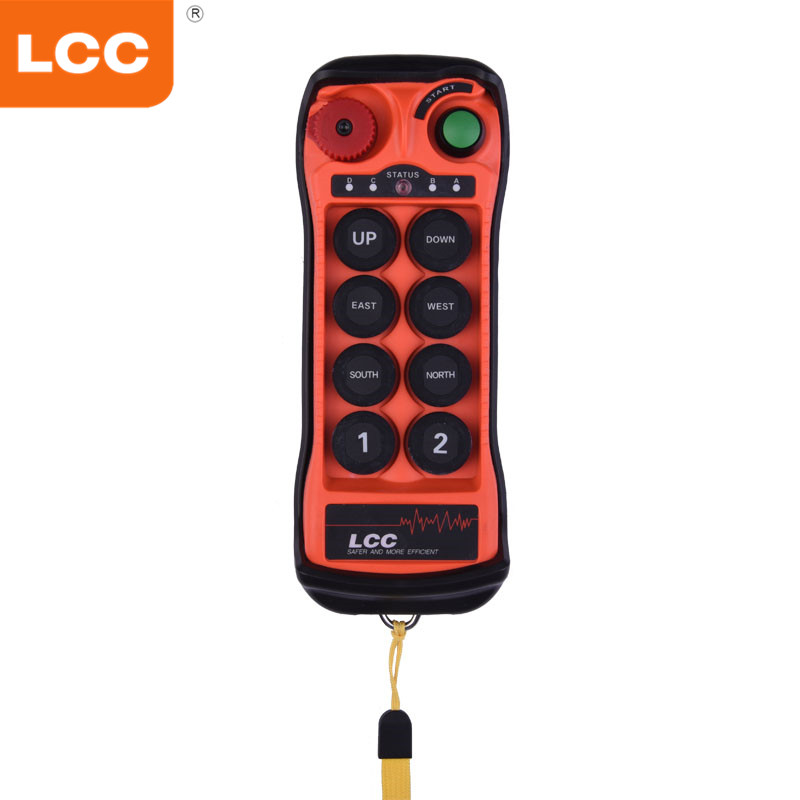
Hardwired pendants severely restrict movement. Operators must follow the load closely. Cables frequently snag on nearby machinery or inventory. This creates immediate trip hazards. Repeated stretching breaks the internal copper wiring. Maintenance teams spend hours repairing broken pendant cables. Upgrading to a wireless winch control eliminates these physical tethers. Facility floors stay clear of dragging cords. Workers experience fewer physical strains. Eliminating the cable removes a common point of mechanical failure entirely. Machine uptime increases significantly when cables stop breaking during critical operations.
Safety improves drastically when operators move freely. Standard 10-foot pendant cables force workers dangerously close to active drop zones. A swinging load presents a massive strike risk. Wireless systems allow dynamic positioning. Operators stand at safe 45-degree angles from the rigging. They easily avoid blind spots caused by large machinery. They can walk entirely around the load to verify clearances before lifting. This optimal line of sight prevents collisions. It protects expensive inventory. Most importantly, it keeps human personnel out of the danger zone.
Advanced setups leverage single transmitters to manage multiple winch systems safely. This is often called pitch and catch capability. One operator seamlessly toggles control between different overhead cranes. Heavy industry relies on this for complex tandem lifts.
Operator A securely guides the load from the initial lifting zone.
Operator A releases control of the hoist midway through the facility.
The system requires a deliberate acceptance protocol.
Operator B takes over control to guide the load into the final drop zone.
This synchronized approach prevents miscommunication. It speeds up long-distance material transfers across massive factory floors.
Factories generate massive amounts of electromagnetic noise. Welding stations and large motors disrupt standard radio signals. You must look for Frequency Hopping Spread Spectrum (FHSS) technology. An Industrial Remote Control using FHSS constantly changes its transmission channel. It jumps across dozens of frequencies every second. If one channel experiences noise, the signal instantly moves to a clear one. This dynamic shifting bypasses localized RF interference completely. Standard fixed-frequency models struggle in these heavy environments. FHSS ensures uninterrupted command execution.
Industrial tools endure harsh treatment. Evaluators must prioritize NEMA 4 or IP65 environmental ratings. These certifications guarantee protection against fine dust ingress. They withstand direct low-pressure water jets during washdowns. Housing materials also dictate lifespan. Avoid cheap plastics. Specify fiberglass-reinforced nylon enclosures. This composite material resists shattering if dropped onto concrete. It also withstands chemical exposure from hydraulic fluids or cleaning solvents. Strong housings protect internal circuit boards from catastrophic physical damage.
Operator comfort directly influences safety. Heavy work gloves make standard flat buttons difficult to feel. Controllers must utilize raised, tactile push-buttons or stepped joysticks. Two-step push-buttons allow precise speed control. The first step engages a slow creep speed. The second step activates full motor speed. Haptic vibration feedback provides physical confirmation of commands. Bright LED indicators display battery life and signal strength. Operators know the system status without looking down away from the moving load.
Safety certifications separate professional equipment from hobbyist gear. You must evaluate the Emergency Stop mechanism rigorously. The E-Stop must operate independently from standard control circuits. It must meet stringent EN ISO 13849-1 standards. Look for Performance Level d or e (PL d/e) ratings. These ratings verify independent dual-channel circuitry. If one safety relay welds shut, the secondary relay still cuts power. Never compromise on certified safety mechanisms when lifting tons of material overhead.
Retrofitting requires meticulous electrical audits. First, assess the current winch enclosure space. Will the new receiver unit physically fit inside? Measure clearances carefully. Next, verify control voltages. A standard winch remote control receiver might require 24VDC, 110VAC, or 220VAC. You must match the receiver power supply to the existing transformer. Ensure internal relays handle the inductive loads generated by older mechanical contactors. Solid-state relays offer long lifespans but require careful voltage matching. Incompatible voltages will instantly destroy the new receiver board.
Thick metal control cabinets create a Faraday cage effect. They trap RF signals and block communication. Do not install the receiver antenna completely inside a sealed steel box. You must mount external antennas. Drill a small hole in the cabinet roof. Secure the antenna externally using a weatherproof gland. Route the coaxial cable carefully to the receiver. Avoid running antenna cables parallel to high-voltage power lines. High voltage induces noise directly into the antenna coax. Proper placement maximizes operating range and eliminates signal dead zones.
Technology upgrades require managing the human element. An industrial radio remote control introduces new daily protocols. Facilities must update safety manuals immediately. Outline strict rules for transmitter storage.
Best Practice: Store transmitters in locked charging cradles when not actively lifting.
Best Practice: Issue individual access codes to authorized personnel only.
Common Mistake: Leaving transmitters resting on uneven forklift dashboards.
Common Mistake: Failing to test the E-Stop button before starting a new shift.
Proactive training prevents accidental actuations and extends hardware lifespan.
E-commerce platforms overflow with cheap, consumer-grade components. Many off-road winch controllers lack basic fail-safes. They use single-channel frequencies. They utilize cheap plastic housings. They do not feature continuous polling. Using these units for heavy industrial applications invites disaster. A stuck relay on a cheap device keeps the winch moving even after releasing the button. Industrial models incorporate redundant architecture. Dual microprocessors constantly monitor each other. If they detect a discrepancy, they trigger an immediate shutdown. Never cut corners on overhead lifting controls.
Evaluate vendors based on long-term scalability. Initial unit cost matters less than lifetime support. You need guaranteed availability for replacement parts. Buttons wear out after millions of cycles. Batteries degrade over years of charging. A reliable vendor provides transparent wiring schematics. They offer local technical support for rapid troubleshooting. Replacing a broken joystick should take minutes, not weeks. Choose manufacturing partners who treat controls as critical safety infrastructure rather than disposable electronics.
Organize your technical requirements before requesting vendor quotes. Use this checklist to define exact system needs.
Count the exact number of required motions (e.g., hoist up/down, trolley left/right).
Identify any necessary auxiliary functions (e.g., warning sirens, floodlights).
Document specific environmental hazards (e.g., fine dust, heavy moisture, extreme heat).
Measure existing control panel space for the new receiver installation.
Confirm the required control voltage for integration.
Clear documentation ensures vendors recommend the correct hardware configuration on the first attempt.
Moving to a wireless control setup is not just a peripheral upgrade. It represents a total modernization of your machine's safety and control infrastructure. Removing the physical tether protects operators from dangerous drop zones. It also prevents costly downtime caused by snagged cables. Successful procurement balances rigorous safety certifications against reliable RF performance. Never compromise on E-Stop reliability or environmental durability. Consult an integration specialist today. Request a comprehensive technical audit of your current hoist systems to begin the modernization process securely.
A: Typically ranges from 300 to 1,000 feet depending on the frequency and environment. However, best practice dictates operating only within clear visual line-of-sight of the load. Operators must always see the rigging and travel path clearly.
A: Industrial systems use proprietary RF bands and frequency-hopping technology. They bypass standard 2.4 GHz Wi-Fi interference entirely. This ensures dedicated, uninterrupted communication between the transmitter and receiver.
A: Yes. The receiver is installed in tandem with or in place of the hardwired pendant terminals. A bypass transfer switch can also be installed. This allows both methods to operate if manual redundancy is required.
A: Industrial systems are fail-safe. If the receiver stops detecting the active continuous signal due to battery failure, it immediately trips the relays. This stops all winch movement and engages the mechanical brakes instantly.